What Is Love? Is Every Spark Really Love?
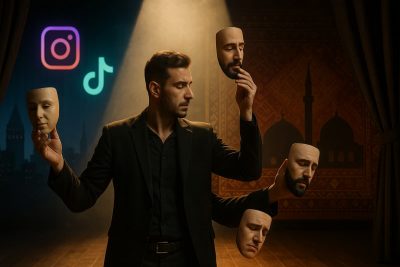
When I look around, I am always surprised by how easily people say, “I’m in love.” I see “lovebirds” sitting in cafés, shooting videos for social media, or sitting side by side on the bus. The word love is used so casually, so carelessly, as if saying “I’m in love” sounds more genuine, more meaningful than simply saying “I like” or “I’m attracted.” But in my view, love is not something that should be spoken of so lightly.

I see love as an unconditional, deep, and almost blind acceptance. Often, it’s a feeling that binds a person so strongly that it can even cause self-harm. That’s why when someone says, “We’ve known each other for two weeks and I’m in love,” I shudder a little. In two weeks, one may feel attraction, curiosity, even strong affection — but love? I don’t think so.
What Do Philosophers Say?
Love has long been one of the most discussed subjects in philosophy — precisely because it’s both deeply personal and universally resonant.
Plato: The Union of Souls
According to Plato, love is not merely physical desire. In Symposium, he divides love into two forms: physical and spiritual. True love transcends physical attraction and helps the soul ascend toward higher ideals. For him, to fall in love is to long for the “world of ideas.” The person you love awakens in you a sense of goodness, beauty, and truth — and that is the philosophical essence of love (Plato, Symposium, ca. 385 BCE).
Schopenhauer: The Mask of Selfish Genetic Desire
The German philosopher Arthur Schopenhauer viewed love through a darker lens. For him, love is part of humanity’s unconscious drive to perpetuate the species. The person we believe we “love” is merely the most genetically suitable partner for reproduction. Thus, love is not pure or noble — it’s a selfish illusion serving biological continuation (Schopenhauer, The World as Will and Representation, 1818).
Kierkegaard: Passionate Surrender
Søren Kierkegaard described love as an existential commitment. To him, love is one of the rare feelings for which a person is willing to sacrifice themselves. True love is not only about passion but also about will. Accepting the one you love as they are and striving for their well-being — this is, for Kierkegaard, the purest form of love (Kierkegaard, Works of Love, 1847).
Is Love Really That Simple?
The more I reflect on these definitions, the clearer my own stance becomes. Yes, to me, love is something serious. It should not be confused with a momentary spark or a fleeting infatuation. Love begins where one’s own existence gains meaning through another’s presence.
To love someone is to look at them — their morning drowsiness, their failures, their wrinkles — with the same tenderness. It’s to love them not only for their “good” and “beautiful” parts but also for their “difficult” and “imperfect” sides.
In that sense, love is not just an emotional high — it is also a decision. It’s about whom you choose, how much you can endure, and how far you’re willing to go through life with them.
In Conclusion: Not Every Affection Is Love
With time, one realizes that many emotions resemble love, but true love is rare. Not everyone who says “I love you” is truly in love; not every couple is bound by it. Because love demands depth, surrender — and often, pain. Yet, if it ever finds you, you’ll know it. For when love arrives, no other feeling will ever resemble it again.